The Kingdom Ascending

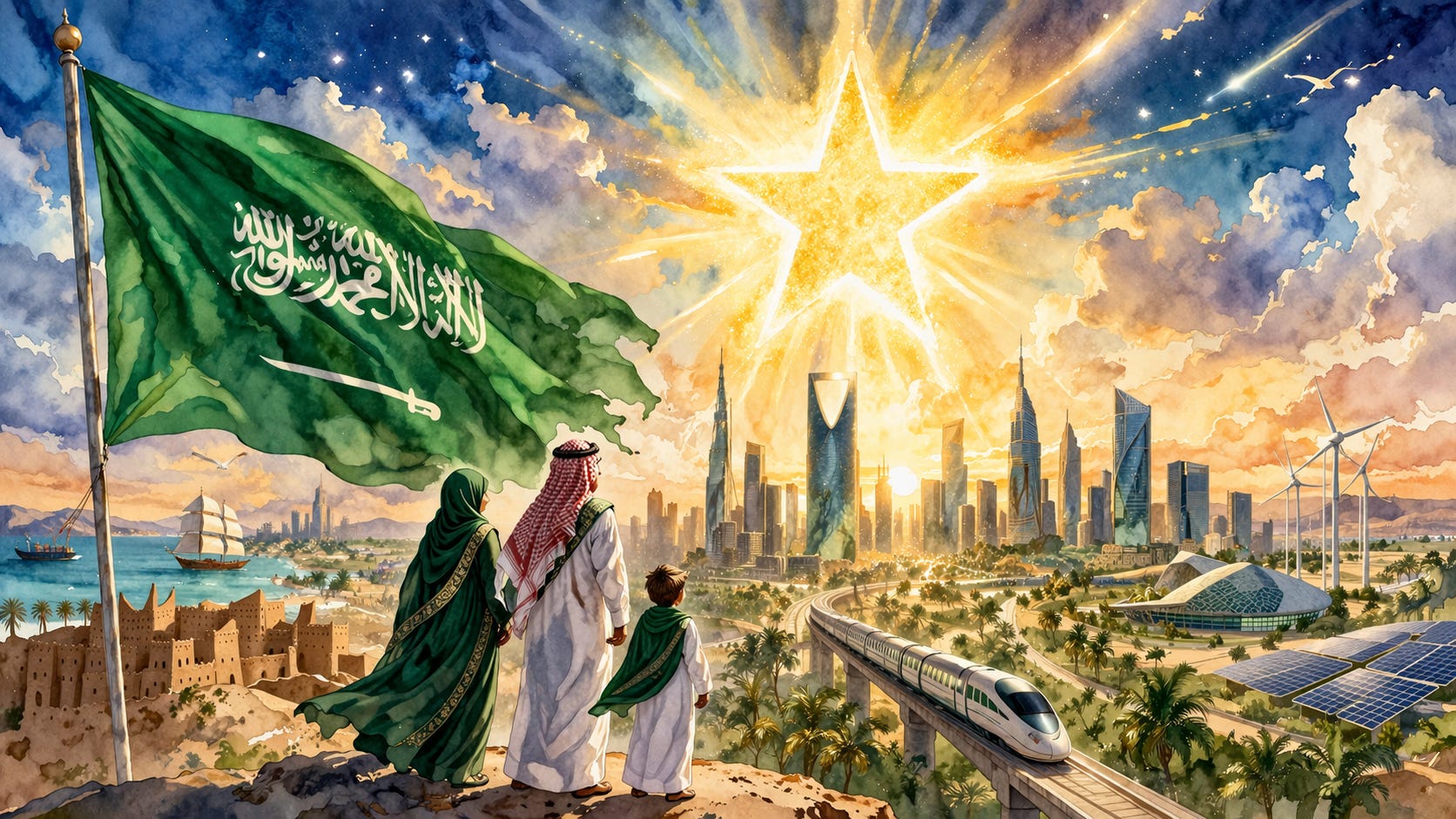
Why Saudi Arabia Is the Rising Star of 21st-Century Geopolitics
I. Introduction: The Superpower Question Reopened
For most of the twentieth century, the architecture of global power was legible and stable. Two superpowers defined the order. After 1991, one remained — and the United States entered an era of unchallenged primacy that shaped every dimension of international life. Today, that era is visibly ending. The United States is strategically overextended, politically fractured, and uncertain about its global commitments. China has grown formidable but confronts demographic decline, a property crisis, and a siege mentality that increasingly isolates it from the world economy. The European Union, despite its aggregate wealth, remains institutionally fragmented and militarily dependent. Russia, for all its nuclear deterrence and tactical ferocity, has exposed the limits of its conventional power in Ukraine.
Into this moment of geopolitical fluidity steps a candidate that most analysts have chronically underestimated: the Kingdom of Saudi Arabia. It possesses what almost no other state in the current system combines — sovereign wealth on an extraordinary scale, a geographic position of genuine strategic centrality, energy leverage that no transition has yet eliminated, and a leadership willing to gamble on transformation at speed. Saudi Arabia is not a superpower today. But the trajectory, examined honestly across its military modernisation, economic diversification, diplomatic repositioning, tourism revolution, and soft-power construction, suggests that the Kingdom may be the most consequential rising power of the coming generation.
The proof has arrived in real time. On 8 April 2026, a two-week ceasefire between the United States, Israel, and Iran came into effect — brokered through Pakistan, coordinated directly with Saudi Crown Prince Mohammed bin Salman, and shaped in part by Saudi Arabia's strategic pressure throughout the five-week war. Trump consulted MBS in multiple phone calls throughout the negotiations. Pakistan's Prime Minister Sharif briefed MBS personally on the eve of the ceasefire, praising his 'wisdom and sagacity' in exercising restraint. The Strait of Hormuz — whose closure had convulsed global energy markets, pushing Brent crude above $109 per barrel — is being reopened. And Saudi Arabia's East-West pipeline, which had rerouted the entirety of the Kingdom's oil exports through the war, demonstrated a strategic resilience no analyst had fully tested until now. The desert has always been building something. The fire has illuminated exactly how much.
II. The Ceasefire as Proof of Concept: 8 April 2026
The agreement reached on 7 April 2026 — announced by Trump on Truth Social hours before his own deadline for catastrophic strikes on Iranian infrastructure — is the single most clarifying event in Saudi Arabia's recent geopolitical trajectory. To understand what it reveals about Saudi power, it is necessary to reconstruct the week that preceded it.
On 5 April, Trump threatened to destroy Iran's power plants, bridges, and oil infrastructure if the Strait of Hormuz was not reopened within two days. Iran's IRGC naval forces announced they were implementing a 'new Persian Gulf order' and that the Strait 'will never return to its former status.' Brent crude held above $100 per barrel. Iranian missiles and drones continued striking Saudi oil facilities, including the SABIC petrochemical complex in Jubail — one of the world's largest industrial cities, where steel, gasoline, petrochemicals, lubricating oils, and fertilisers are produced. Saudi Arabia's defence ministry intercepted 18 drones in a single morning. The King Fahd Causeway linking Riyadh's sphere to Bahrain closed for the second time.
NPR / CBS News (8 April 2026): A US-Iran ceasefire took effect on 8 April, based on a Pakistani-mediated 10-point proposal. Iran agreed to reopen the Strait of Hormuz for safe passage. Trump spoke multiple times with Saudi Crown Prince MBS throughout the negotiations; Pakistan's PM Sharif briefed MBS personally and praised his 'wisdom and sagacity' in exercising restraint.
Throughout this final escalatory spiral, the Gulf states held — but they waited. Kuwait shot down 17 hostile drones in 24 hours. The UAE activated air defences. Saudi Arabia intercepted ballistic missiles over the Eastern Province. Yet none acted unilaterally. None escalated. None issued independent ultimatums. Every public statement from Bahrain, Kuwait, Qatar, and the UAE echoed a position that Saudi Arabia had already staked out. This is the defining pattern of regional hegemony: smaller states move in the slipstream of the largest, not ahead of it.
The ceasefire terms themselves reveal Saudi Arabia's fingerprints throughout. The Pakistani mediation — which Saudi Arabia endorsed and actively supported since early March — succeeded where Omani, Egyptian, Turkish, and Chinese efforts had stalled. The 10-point Iranian proposal, relayed through Pakistan, the only communication channel between the parties, was accepted by Trump after phone calls with MBS and UAE President Mohamed bin Zayed. Saudi Arabia and the UAE had been urging Trump to hold firm for major concessions from Iran; when the ceasefire was accepted, it was on terms that include Iranian commitments on the Strait, a two-week negotiating window in Islamabad, and a broader framework that Saudi Arabia has been shaping from the diplomatic wings throughout.
Axios (7–8 April 2026): Trump raised the ceasefire talks in a call with Saudi Crown Prince MBS. Netanyahu, the leaders of Saudi Arabia and the UAE, and Sen. Lindsey Graham had all urged Trump to reject any proposal unless Iran made major concessions. The ceasefire ultimately accepted Iran's framework as a 'basis for negotiations' — a result closer to the Saudi-preferred 'maximalist before negotiating' approach than to the off-ramp camp within Trump's team.
What emerges from this reconstruction is a picture of Saudi Arabia operating simultaneously as a military target absorbing Iranian strikes, a diplomatic architect shaping the terms of negotiation through Pakistan, a creditor of strategic patience whose restraint enabled mediation, and a principal interlocutor whose phone with Trump rang when the most consequential decisions in the crisis were being made. No other state in the Middle East — not Israel, not Turkey, not Egypt — occupied all four of these positions at once. That is superpower posture, even if the formal designation is still premature.
III. The Energy Foundation: Leverage That Endures
Any serious account of Saudi power must begin with hydrocarbons, not because they define the Kingdom's future, but because they fund it. Saudi Arabia holds approximately 17 percent of the world's proven oil reserves — the second-largest national share on the planet — and produces roughly ten million barrels per day, giving it singular swing capacity within OPEC+. Aramco remains the most profitable corporation in human history by most measures, generating net income that dwarfs Apple, ExxonMobil, and JPMorgan combined in peak years.
The Iran war provided the most dramatic demonstration yet of Saudi Arabia's energy resilience. When Iran closed the Strait of Hormuz in late February 2026, the Kingdom pivoted within hours to its East-West pipeline — a strategic artery bisecting the country — to maintain exports of seven million barrels per day through Red Sea terminals, bypassing Hormuz entirely. Aramco's CEO warned publicly of 'catastrophic consequences' for the world economy from sustained disruption, and that warning was heard on every trading floor from Chicago to Tokyo. The ceasefire agreed on 8 April includes Iran's commitment to reopen the Strait — restoring normal passage to a waterway through which roughly one-fifth of global oil trade typically flows. Saudi Arabia's pipeline provided the world a partial workaround for 39 days. No other state on earth can offer that.
Oxford Business Group (2025): Saudi Arabia holds 17% of global oil reserves and aims to attract $100 billion in annual FDI by 2030. FDI inflows in 2024 reached $31.7 billion — a 24% increase from 2023, one of the highest levels in recent history.
The conventional critique is that this leverage is temporary — that the energy transition will strand Saudi assets and hollow out its treasury within a generation. This critique is partly valid but largely premature. The IEA's most aggressive transition scenarios still project significant global oil demand well into the 2040s. Developing economies in Asia and Africa, whose energy needs are growing fastest, are not decarbonising at the pace of Western Europe. Saudi Arabia, aware of this window, is using it intelligently: extracting maximum revenue now while deploying that revenue into the diversification structures that will outlast oil.
IV. Vision 2030 and Economic Transformation
The economic case for Saudi Arabia's rise rests substantially on Vision 2030 — the Crown Prince Mohammed bin Salman's sweeping blueprint for structural transformation, announced in 2016 and now in its decisive implementation phase. Vision 2030 is an attempt to rewire a rentier economy into a diversified, productive, internationally competitive one within a single generation.
IMF / Atlantic Council (2025): Saudi Arabia's non-oil real GDP grew 4.5% in 2024. After GDP rebasing, the non-oil economy now accounts for roughly 76% of total GDP — a major structural shift. The ICT sector has grown to an estimated 15.6% of GDP, the largest in the MENA region.
Harvard Kennedy School's Growth Lab has analysed Vision 2030 in detail, noting both the impressive pace of reform execution and the structural challenge that fiscal dependency on oil revenue has not yet been fully eliminated. A Bloomberg chief emerging markets economist, speaking at a Harvard Growth Lab DevTalk in December 2025, observed that while the social transformation has been real and remarkable, the macroeconomic breakeven oil price remains a vulnerability — JP Morgan estimates the fiscal breakeven at approximately $98 per barrel. This is an honest critique. It is also one that the PIF's trillion-dollar mandate is explicitly designed to address over the coming decade.
Vision 2030 Annual Report (2024): 80% of the key performance indicators established under the Vision Realization Programs have been achieved, with a further 13% on track to be met.
The Public Investment Fund, the sovereign wealth vehicle anchoring the entire transformation, has grown from $150 billion in assets in 2015 to $1.15 trillion by end-2025 — making it the world's fifth-largest sovereign wealth fund and, by investment spending, the most active in the world. In 2025 alone, the PIF deployed $36.2 billion in investments — an 81 percent increase from the prior year — and was ranked first globally among 200 sovereign investors for governance, sustainability, and resilience by Global SWF, with a score of 100 percent. The PIF's cumulative contribution to real non-oil GDP between 2021 and 2024 reached $243 billion.
Global SWF Annual Report (2025): Gulf sovereign wealth funds collectively deployed a record $119 billion in 2025 — a 43% increase from 2024 — accounting for 43% of all capital invested by state-owned investors globally. Saudi Arabia's PIF led all funds in absolute investment spending at $36.2 billion.
Compare this trajectory to the established powers. The United States economy remains the world's largest but is burdened by national debt exceeding thirty-five trillion dollars, an infrastructure deficit measured in the trillions, and political gridlock that makes sustained industrial policy nearly impossible. China's economic model faces structural headwinds: a shrinking working-age population, a real estate sector carrying debts measured in the tens of trillions of yuan, and a technology embargo threatening to cap its productivity frontier. Saudi Arabia, by contrast, begins its transformation with a sovereign balance sheet that is largely clean, a young and growing population, and the institutional capacity to execute top-down economic policy without democratic friction.
V. The Iran War: A Crucible of Superpower Credentials
No recent event has tested Saudi Arabia's superpower credentials more acutely — or more revealingly — than the 2026 Iran war. When the United States and Israel launched strikes on Iran on 28 February 2026, killing Supreme Leader Khamenei and triggering full-scale Iranian retaliation across the Gulf, the Kingdom found itself at the centre of the most consequential regional crisis since the Gulf War. Its response has been neither passive nor reckless. It has been strategic.
Iran attacked all six GCC member states in the opening days of the conflict — for the first time in history. Saudi Arabia intercepted missiles aimed at Riyadh, the Prince Sultan Air Base, and the Ras Tanura oil refinery. Iranian drones struck the US Embassy in Riyadh and residential areas in Al-Kharj, killing two people. The Kingdom's air defences performed under sustained pressure. Its East-West pipeline was activated to maintain oil exports. And — critically — Saudi diplomatic communications with Tehran continued throughout. Saudi officials confirmed daily contact with Iranian counterparts even as Saudi defence batteries were shooting down Iranian projectiles.
ACLED Middle East Special Issue (March 2026): For the first time in history, Iran attacked all GCC member states. Few Gulf monarchies had anticipated this escalation. The GCC's response — unified condemnation, joint self-defence declarations, and coordinated diplomatic signalling — was orchestrated around Saudi Arabia as the pivotal member.
What distinguishes Saudi Arabia's position throughout this crisis is the deference that all other regional actors extended to Riyadh before moving. The smaller Gulf states absorbed Iranian strikes and suffered casualties, but issued no major independent policy shifts until Saudi Arabia's position was clear. When Riyadh and Abu Dhabi jointly warned that continued Iranian attacks might lead to regional escalation, the GCC issued a collective condemnation the same day. When Saudi Arabia expelled Iranian defence officials and gave them 24 hours to leave the country, the regional temperature changed immediately.
The war has also produced an unexpected nuclear dimension. The Stimson Center has reported that Saudi Arabia's negotiations with Washington for civilian nuclear cooperation are advancing under terms that would allow Riyadh to enrich uranium without accepting the Additional Protocol of the Nuclear Non-Proliferation Treaty. The Trump administration used a waiver provision in the National Defense Authorization Act to bypass this requirement, submitted to Congress in November 2025. If concluded, Saudi Arabia would join an extremely small club of states operating civilian nuclear infrastructure — another marker of the progression from regional power to global actor.
Stimson Center (2026): Many in the GCC believe the Iran war reinforced the perception that Washington prioritises Israel's security over Gulf partners. Saudi Arabia's multidirectional hedging strategy — including the Pakistan defence pact and nuclear cooperation negotiations with Washington — represents the most comprehensive security architecture any Gulf state has constructed.
The ceasefire of 8 April 2026 closes this chapter — at least temporarily. But its terms, its process, and its outcome all point in the same direction. Saudi Arabia was the indispensable party throughout: the state that Iran could not afford to push too far because its restraint was enabling Pakistani mediation; the state that Trump consulted to calibrate the terms of a deal; the state whose infrastructure the whole world watched to understand whether global energy supply would survive the crisis. This is not the record of a rising power in the conventional sense. It is the record of a state that has already arrived at the centre of global events.
VI. Military Modernisation: From Client to Actor
Saudi Arabia has long been a major arms importer — the United States, United Kingdom, France, and others have competed ferociously for Saudi defence contracts worth hundreds of billions of dollars over decades. This created a peculiar dependency: the Kingdom possessed sophisticated equipment it often lacked the indigenous capacity to maintain, integrate, or deploy with full autonomy. That relationship is changing.
Vision 2030 includes an explicit target for domestic defence production: fifty percent of military equipment to be manufactured inside the Kingdom by 2030. The Saudi Arabian Military Industries (SAMI) conglomerate, established in 2017 through the PIF, has been acquiring stakes in foreign defence firms, licensing technology, and building local production capacity at speed. Joint ventures with L3Harris Technologies — one of the world's largest aerospace and defence systems manufacturers — are operational. During the current war, a Saudi arms company signed a contract to purchase interceptor missiles from Ukraine, while Greek-operated Patriot systems contracted to Saudi Arabia intercepted two Iranian ballistic missiles targeting oil refineries in March 2026. This is a live test of integrated, multinational air defence at the scale of a real war.
The Yemen war, however costly and controversial, functioned as a brutal operational laboratory. The Royal Saudi Air Force accumulated thousands of combat flight hours. Saudi forces developed real-time doctrines for managing drone warfare, ballistic missile threats, and asymmetric operations — exactly the competencies that the Iran war now demands. The war has validated those investments in the most unambiguous possible way: Saudi air defences intercepted hundreds of projectiles over 39 days of sustained attack, protecting critical energy infrastructure and civilian areas at a level of operational continuity that surprised even allied defence planners.
Pakistan Today / Wikipedia (April 2026): Pakistan's mutual defence agreement with Saudi Arabia (signed September 2025) was invoked during the Iran war. Pakistan's military strongly condemned attacks on Saudi petrochemical facilities, calling them an 'unnecessary escalation' that risked derailing negotiations. A Pakistani security source warned that any Saudi retaliation could end the negotiations — illustrating how central Saudi restraint was to the entire diplomatic process.
VII. The Diplomatic Revolution: Sitting at Every Table
Perhaps the most underappreciated dimension of Saudi Arabia's rise is its diplomatic revolution. For most of the post-war era, Riyadh's foreign policy was defined by three relationships: strategic alignment with the United States, theological leadership of Sunni Islam, and management of the regional rivalry with Iran. Each of these has been fundamentally renegotiated.
The March 2023 China-brokered normalisation agreement with Iran was a seismic diplomatic event — not because it resolved the underlying tensions, which the 2026 war has now exposed as permanent, but because it announced that Saudi Arabia was prepared to use any available great-power intermediary to advance its interests. During the war, Saudi Arabia simultaneously endorsed Pakistan, Turkey, and Egypt as mediators; maintained daily diplomatic channels with Tehran while absorbing Iranian missile strikes; hosted Ukraine's President Zelensky in Jeddah in March 2026; coordinated with Israel's principal patron (the United States) as a fellow target of Iranian aggression; and received the Pakistani Prime Minister's personal briefings on ceasefire progress. This is multi-alignment executed at the highest level of diplomatic sophistication.
TRT World / Axios (April 2026): Saudi Arabia participated in multilateral diplomatic meetings alongside Pakistan, Turkey, and Egypt to push for a ceasefire. Trump raised ceasefire terms in direct calls with MBS. The ceasefire proposal that ultimately succeeded was a Pakistani initiative that Saudi Arabia had endorsed since early March — making Riyadh's earlier diplomatic backing a precondition for the deal's credibility with both parties.
Saudi Arabia has thus served simultaneously as a war party, a diplomatic sponsor of the mediating power, a principal interlocutor for the United States, and a credible restraint signal to Iran. No other state in the current international system occupies all four roles simultaneously in a major crisis. The Atlantic Council observed that GCC member states sit at the centre of the uncertainty defining this phase — and that Saudi Arabia is the first among these equals by every measure. The ceasefire proves it.
VIII. Tourism: Building the Soft-Power Economy
Tourism may seem an unlikely pillar of superpower analysis, but it is central to Vision 2030's logic and to the broader soft-power project Saudi Arabia is constructing. Before 2017, the Kingdom barely existed as a leisure tourism destination. Non-religious tourism was effectively prohibited. The country was closed to the world in ways that both reflected and reinforced its image as an austere, opaque petrostate.
Oxford Business Group (2024): Saudi Arabia's tourism income surged 38% in 2023, driving a record service trade surplus. Vision 2030 targets tourism at 10% of GDP and 1.6 million jobs by 2030. Foreign tourist spending totalled just under $40 billion annually by mid-2025, 4% above the prior year. Close to 30 million foreign visitors arrived in Q1 2025 alone.
The transformation since 2019 has been remarkable in pace. Al-Ula — an archaeological complex of stunning scale, with Nabataean ruins rivaling Petra in grandeur — has been developed into a world-class destination attracting international architects, artists, and cultural institutions. The Red Sea Project is developing a luxury resort archipelago designed to compete with the Maldives and Seychelles. Diriyah, the ancestral home of the Al-Saud dynasty near Riyadh, is being transformed into a heritage and cultural district. NEOM's component projects — The Line, Sindalah island, Trojena mountain resort — represent a speculative but vast bet on constructing entire new tourism ecosystems from empty landscape.
The Iran war introduced a significant short-term headache: the US Embassy in Riyadh advised Americans to reconsider Hajj participation, and commercial flights to Saudi Arabia operated under intermittent air traffic restrictions. Saudi airspace remained open throughout, however — a testament to the operational competence of its air defences — and the Kingdom's airports continued functioning even as Iranian drones were being intercepted overhead. If that sentence sounds extraordinary, it is. The 2034 World Cup destination absorbed an active missile barrage and kept its airports open. That is the kind of institutional resilience that transforms a soft-power investment into a hard-power credential.
IX. Sports Diplomacy and Cultural Power
Saudi Arabia's sports investments have attracted more criticism than any other element of its transformation strategy — much of it legitimate, given the human rights concerns that critics invoke as context. But criticism should not obscure analysis. Saudi Arabia's entry into global sport as a major capital allocator is a deliberate soft-power strategy with clear historical precedents: the United States built cultural hegemony partly through Hollywood and the NBA; China invested billions in hosting global sporting events; Qatar's World Cup demonstrated the transformative international exposure that sports hosting can generate.
The Public Investment Fund's acquisition of Newcastle United was a marker. LIV Golf forced a renegotiation of the entire global golf ecosystem. Saudi Arabia will host the 2034 FIFA World Cup — the planet's single largest sporting event — giving it a decade to build the infrastructure and narrative to transform its international image at scale. In early 2026, the PIF acquired a controlling stake in Electronic Arts for $28.8 billion — the largest transaction by any sovereign wealth fund in the digital entertainment sector — giving Saudi Arabia direct influence over the gaming habits of hundreds of millions of people worldwide. Formula One cancelled the Saudi and Bahrain Grands Prix in 2026 due to the war; they will return. The brand is durable because the capital behind it is inexhaustible.
Global SWF Brand Finance (2025): The PIF holds the most valuable and fastest-growing brand in the world among all sovereign wealth funds, with an A+ brand rating. The fund tied for first place globally among 200 sovereign investors for governance, sustainability, and resilience with a 100% score.
X. The Islamic World: Theological Leverage Without Parallel
Saudi Arabia's custodianship of Mecca and Medina — the two holiest sites in Islam — provides a dimension of global influence with no parallel among rising powers. Approximately 1.8 billion Muslims regard these cities as the spiritual centre of their faith. The Hajj brings two to three million pilgrims to Mecca each year from every corner of the world. No other state in the international system commands this kind of transnational spiritual legitimacy.
The Iran war has sharpened this dynamic in complex ways. The US Embassy in Riyadh advised Americans to reconsider Hajj participation this year, citing ongoing security concerns and intermittent travel disruptions. Saudi airspace restrictions have complicated logistics for pilgrims from some countries. But the very fact that Hajj is proceeding — that Mecca remains functional, open, and accessible despite 39 days of missile and drone attacks in the surrounding region — is itself a statement of Saudi institutional competence and strategic priority. The Kingdom has protected the holiest sites in Islam under fire. That is not a minor footnote; it is a theologically resonant geopolitical fact that will be heard in every Muslim community on earth.
The Saudi-Iran détente that had been carefully built since 2023 — including expanded Hajj quotas for Iranian pilgrims and direct flights from Iranian cities — has been severely damaged by the war. Tehran's decision to strike Saudi Arabia despite the détente framework has cost Iran dearly in terms of its standing in Muslim opinion. Saudi Arabia, which positioned itself as the restraint party throughout, emerges from the crisis with the moral high ground in the Islamic world — and that is a form of soft power that converts directly into diplomatic capital.
XI. Technology, AI, and the Knowledge Economy
Saudi Arabia's ambitions in technology are less immediately visible than its oil wealth or its sports investments, but they are structurally significant. The Kingdom has positioned itself as a major investor in the global artificial intelligence ecosystem, recognising that the next wave of economic productivity — and military capability — will be shaped by compute, data, and algorithmic sophistication.
Oxford Business Group (2024): AI is expected to add $135 billion to the Saudi economy by 2030. The digital economy contributes 14% of GDP currently, with a Vision 2030 target of 19.2%. Saudi Arabia leads the MENA region in digital maturity, with the ICT sector — valued at $44 billion — the largest in the region.
NEOM is not merely a real estate venture. It is a laboratory for smart city technologies, autonomous transport, AI-managed urban systems, and zero-carbon energy integration at a scale that no existing city can attempt because it is being designed from an empty landscape. The PIF has signed an MoU with Microsoft to explore sovereign-cloud services in Saudi Arabia, and established HUMAIN, a dedicated AI company, to build domestic capabilities. The Saudi Arabia-US Investment Forum in November 2025 — attended by Jensen Huang of Nvidia and Elon Musk alongside MBS and Trump — formalised technology partnerships positioning the Kingdom as a node in the global AI infrastructure supply chain. The Trump administration's willingness to allow Saudi uranium enrichment without the Additional Protocol is partly motivated by Riyadh's ambition to power large-scale AI compute facilities with civilian nuclear energy.
XII. Comparing the Contenders
It is worth pausing to examine how Saudi Arabia's trajectory compares with the current and aspiring superpowers across each dimension analysed.
The United States
The United States retains formidable assets: the world's largest economy, the dominant reserve currency, the most extensive military alliance network in history, and technological leadership across most critical domains. But the Iran war has exposed a new American vulnerability: a principal whose Gulf partners — Saudi Arabia and the UAE — were simultaneously allied with it, targeted by its enemy, and quietly lobbying it to pursue more hawkish terms. American power operates through Saudi Arabia in the Gulf, not above it. The ceasefire of 8 April was announced by Trump, but it ran through Riyadh.
China
China possesses extraordinary manufacturing depth, a formidable military modernisation program, and decades of infrastructure investment that have made it indispensable to dozens of developing economies. But China's demographic pyramid is inverting. Its working-age population is shrinking. Its economic model faces a hostile trade environment. And during the Iran war, China's diplomatic reach proved limited: Beijing and Russia vetoed a UN Security Council resolution on Hormuz access — siding with Iran against the Gulf states — and this alignment with Tehran has damaged China's standing with Saudi Arabia and the GCC at precisely the moment those relationships are most strategically valuable. Multi-alignment requires partners. China chose a side.
The European Union
The EU remains the world's largest single market and a regulatory superpower of genuine global reach. But its foreign policy remains hostage to unanimity rules that allow individual member states to veto collective action. Its strategic autonomy ambitions have been set back by the need to re-arm in response to Russia. During the Iran war, the EU was largely a spectator. It will shape the global economy through regulation. It will not project military or diplomatic agency at superpower scale.
India
India is the most genuine long-term competitor to Saudi Arabia's aspirations for regional and global influence. With the world's largest population, a growing economy, a democratic system providing legitimacy, and a tradition of strategic autonomy dating to Nehru, India is a rising power of real substance. But it confronts infrastructure deficits that dwarf anything Saudi Arabia faces, a federal political structure that complicates industrial policy, and a per-capita income level that places it decades behind Saudi Arabia's modernisation trajectory. India will be a great power. It will not be a superpower in the 2030s.
Saudi Arabia, by contrast, is small enough to transform rapidly, rich enough to fund the transformation without external borrowing, and centrally located enough to be genuinely indispensable to the energy, trade, and diplomatic systems that every major power needs to operate. The war has not weakened this position. It has clarified it.
XIII. The Risks: What Could Derail the Kingdom
Intellectual honesty requires acknowledging the risks, which are significant. The entire transformation project rests on the judgment and survival of a single leader — Mohammed bin Salman. His 2017 consolidation of power was achieved through methods that created enemies and vulnerabilities. The killing of journalist Jamal Khashoggi in 2018 demonstrated that Saudi Arabia's reform narrative can be catastrophically destabilised by a single act of state violence. A succession crisis, a serious assassination attempt, or a palace coup could disorient the entire Vision 2030 trajectory.
The Iran war has introduced new structural vulnerabilities that the ceasefire only partially resolves. The Stimson Center noted that Iran's decision to target civilian infrastructure — airports, oil refineries, petrochemical facilities — undermined the 'safe hub branding' on which Vision 2030's tourism and FDI strategy depends. Iranian strikes on SABIC facilities in Jubail, one of the world's largest industrial cities, represent attacks on the physical backbone of Saudi non-oil economic diversification. The ceasefire buys time; it does not guarantee that Iranian missiles do not return. The 2034 World Cup, the NEOM megacity, and the Red Sea Project all require a regional security environment that remains structurally fragile.
Harvard Kennedy School Growth Lab (December 2025): While the social transformation under Vision 2030 has been real and measurable, the macroeconomic breakeven oil price remains a structural vulnerability. JP Morgan estimates the fiscal breakeven at approximately $98 per barrel, underscoring a revenue gap at a time when megaproject capital requirements continue to expand.
Finally, the two-week ceasefire is a pause, not a resolution. Peace talks are scheduled in Islamabad on 10 April 2026, with Vice President Vance likely leading the US delegation. Iran's demands — lifting of all sanctions, release of frozen assets, withdrawal of US forces from Gulf bases, compensation, and the right to nuclear enrichment — are fundamentally incompatible with the positions Saudi Arabia and Israel have urged Trump to maintain. The coming months will determine whether the ceasefire framework holds, whether Hormuz stays open, and whether the broader Middle Eastern order stabilises around a new equilibrium. Saudi Arabia will be at the centre of every one of those negotiations. That centrality is a strength. It is also an exposure.
XIV. Conclusion: The Star Rising from the Desert
Superpower status has never been purely a function of military might or economic output. It has always been an amalgam of material capabilities, geographic centrality, diplomatic agency, narrative authority, and the capacity to shape the environment in which other states operate. The United States acquired it through a combination of industrial scale, financial architecture, cultural export, and the exhaustion of its rivals. China has pursued it through decades of disciplined accumulation and strategic patience. Saudi Arabia is attempting something different: a compressed, capital-intensive transformation that leverages a finite resource window to build a diversified foundation for permanent strategic relevance.
The five weeks from 28 February to 8 April 2026 have compressed what might otherwise have been a decade of strategic assessment into a single observable sequence. In that sequence: Saudi Arabia absorbed Iranian missile strikes and kept its airports and pipeline running. It exercised restraint that its allies praised and its enemy exploited less than it could have. It backed the mediating power — Pakistan — whose proposal ultimately produced the ceasefire. It participated in the phone calls that shaped Trump's decisions. It signed intercept-missile contracts with Ukraine. It kept Hajj logistics operational. It expelled Iranian defence officials when it needed to send a signal. And it emerged from the crisis with its infrastructure intact, its diplomatic relationships deepened, and its strategic indispensability demonstrated to every party in the conflict.
The Oxford Business Group's 2025 Saudi Arabia report observes that the Kingdom is entering a new phase of its Vision 2030 agenda, with greater emphasis on consolidating and maximising the impact of economic reforms introduced over the past decade. The IMF reports that the non-oil economy now accounts for 76 percent of total GDP. Female labour force participation has doubled from 17 percent to 36 percent in under a decade. FDI inflows grew 24 percent in a single year. The PIF is the world's most active sovereign investor. The 2034 World Cup is confirmed. The civilian nuclear programme is advancing. The East-West pipeline held under fire.
The risks are real, the timeline is contested, and the human rights record is a genuine moral liability that no strategic account should minimise. The ceasefire of 8 April is fragile. The two-week window ahead in Islamabad may fail. The post-war Middle Eastern order remains unresolved. But the trajectory of Saudi Arabia's power — across military, economic, diplomatic, cultural, and theological dimensions simultaneously — is one of the most compelling ascent stories in modern geopolitical history.
History does not guarantee Saudi Arabia's rise. Geography, capital, and ambition create opportunities; they do not determine outcomes. But if the question is which state in the current international system most plausibly ascends from regional power to global significance within the next two decades, the honest answer — uncomfortable as it may be for those who prefer their rising stars to be democratic — is the Kingdom of Saudi Arabia.
On 8 April 2026, as the ceasefire took effect and the Strait of Hormuz began to reopen, the world saw what Saudi Arabia had become. The desert had been building something all along. The fire made it visible.
Principal Sources Cited
Oxford Business Group — The Report: Saudi Arabia 2024 & 2025 (oxfordbusinessgroup.com)
Harvard Kennedy School Growth Lab — DevTalks: Diversifying from Oil: Aspirations and Results of Saudi Arabia's Vision 2030 (December 2025, growthlab.hks.harvard.edu)
Vision 2030 Annual Report 2024 — Kingdom of Saudi Arabia (vision2030.gov.sa)
IMF / Atlantic Council — Saudi Arabia's Next Horizon: Building Human Capital Beyond Vision 2030 (November 2025)
Global SWF — Annual Report 2025; PIF Named World's Most Active Sovereign Wealth Fund in 2025 (January 2026)
ACLED — Middle East Special Issue: March 2026 (acleddata.com)
Arab Center Washington D.C. — The GCC States and the War on Iran (March 2026, arabcenterdc.org)
Atlantic Council — How the Iran War Could Change the US Relationship with Gulf States (March 2026)
Stimson Center — Saudi Arabia's Nuclear Path Will Not Depend on Iran or the War's Outcome (2026)
Christian Science Monitor — Saudi Arabia Hopes Diplomacy Works with Iran. It's Also Preparing for a Military Response (April 2026)
CNBC — Gulf States Say They're Ready for Self-Defence as Stance Shifts on Iran War (March 2026)
Middle East Council on Global Affairs — The Saudi-Iranian Détente: A Strategic Imperative (February 2026)
NPR / CBS News — U.S. and Iran Agree to 2-Week Ceasefire, Suspending Trump's Threat to Annihilate Iran (8 April 2026)
Axios — US, Iran to Pause War, Agree to 2-Week Ceasefire; Trump Raised Talks in Call with MBS (7–8 April 2026)
Boston Globe — Trump Pulls Back on Iran Threats: Live Updates; Pakistan PM Briefs MBS on Mediation (8 April 2026)
Wikipedia — 2026 Iran War; 2026 Iranian Strikes on Saudi Arabia; Pakistan in the 2026 Iran War (updated 8 April 2026)
Pakistan Today — Pakistan Mediation as US-Iran Tensions Hit Critical Stage (7–8 April 2026)
Al Jazeera — Iran War: What Is Happening on Day 39 of US-Israeli Attacks (7 April 2026)
Public Investment Fund — Annual Report 2024; PIF Press Releases 2025–2026 (pif.gov.sa)
AGSI — Vision 2030 Reforms and Economic Outcomes in Saudi Arabia (October 2025)